Picture this: you’re 72, your knees creak when you stand, and the thought of a gym makes you wince. Yet every morning you feel a little stiffer, a little less steady on your feet. That was my neighbor Margaret exactly. At 68 she could barely reach her toes without groaning. Then she tried a gentle chair yoga class at the local senior center. Six months later she was walking her dog without a cane and laughing about how she finally slept through the night. Stories like Margaret’s aren’t rare—they’re the quiet revolution happening in living rooms and community halls across the country.
Yoga isn’t about twisting into pretzels or wearing fancy leggings. For seniors, it’s a low-impact practice that meets you exactly where you are—on a chair, on a mat, or even standing with a wall for support. It builds strength, improves balance, eases joint pain, and calms the mind without pounding your joints. And the best part? You don’t need to be flexible or fit to start. You just need to show up.
If you’re over 65 and wondering whether yoga could be your new best friend, you’re in the right place. This guide walks you through everything—from why it works so well for older bodies to simple poses you can try today. No fluff, no hype, just real talk backed by science and real seniors who’ve made it part of their lives.
Why Yoga Is Perfect for Seniors in Their Golden Years
Most exercise programs push high-impact moves that can leave seniors sore or sidelined. Yoga flips the script. It uses slow, controlled movements and breath to gently wake up muscles, joints, and even your nervous system. You stay in control the entire time, which means fewer injuries and more confidence.
The beauty is its adaptability. Whether you have arthritis, osteoporosis, or just a touch of stiffness after decades of living, yoga can be modified. Chair versions keep you seated. Wall support keeps you steady. Props like blocks or blankets turn “impossible” into “I did it.” It’s exercise that respects your body instead of fighting it.
The Science-Backed Benefits That Actually Matter
Research keeps piling up, and it’s not just feel-good anecdotes. A systematic review of trials with adults 60 and older found yoga improves balance and mobility with moderate effect sizes—enough to lower fall risk noticeably. Harvard researchers reviewed 33 studies and concluded yoga boosts walking speed and leg strength, two key markers of healthy longevity.
On the mental side, the gains are just as impressive. Regular practice cuts anxiety and depression symptoms while sharpening memory and focus. One study even showed long-term practitioners had better brain connectivity in areas tied to decision-making.
Cellular aging slows too. Yoga appears to reduce oxidative stress and inflammation—markers that accelerate everything we dread about getting older.
How Yoga Improves Balance and Cuts Fall Risk
Falls are the leading cause of injury in people over 65. Yoga trains the tiny stabilizer muscles that keep you upright. Tree pose variations, even done seated, wake up ankles, knees, and hips. Over time, you react faster when something wobbles.
A 12-week program in one trial cut fear of falling while boosting functional mobility scores. Participants moved more confidently in daily life—reaching for the top shelf, stepping off curbs, or just standing longer without swaying.
Boosting Flexibility Without Forcing It
Stiffness creeps in after years of sitting at desks or driving. Yoga’s gentle stretches lengthen muscles and lubricate joints. Cat-cow on a chair or seated spinal twists restore range without strain.
Women aged 50–79 in one 20-week study gained significant spinal mobility and core strength. The secret? Holding poses for breath cycles instead of forcing deeper bends.
Easing Joint Pain and Managing Arthritis
If your knees or hips ache, the last thing you want is more pounding. Yoga’s low-impact nature actually soothes inflamed joints. Gentle movements increase circulation, which delivers nutrients and flushes waste.
Johns Hopkins reviews confirm gentle yoga eases arthritis discomfort. Seniors often report less morning stiffness and better grip strength after consistent practice.
Strengthening Bones and Supporting Heart Health
Weight-bearing elements—even modified—stimulate bone density. Yoga also lowers blood pressure and improves circulation, two big wins for heart health in later years.
Calming the Mind and Lifting Mood
Breathwork and mindfulness in yoga quiet the chatter that keeps many seniors awake. Studies show reduced cortisol and better sleep quality. One group over 60 slept longer and deeper after just a few weeks.
Chair Yoga: The Smart Starting Point for Most Seniors
If standing feels risky or your balance isn’t what it used to be, chair yoga is your gateway. Every traditional pose has a seated version. You still gain strength, flexibility, and calm—without ever leaving the seat.
Community classes and free YouTube videos make it accessible. Many Medicare plans even cover SilverSneakers chair yoga sessions.
10 Gentle Yoga Poses Seniors Can Do Today
Start with 5–10 minutes, 3 times a week. Breathe steadily and stop if anything hurts.
Seated Mountain Pose
Sit tall, feet flat, shoulders relaxed. Lift through the crown of your head. This simple posture resets alignment and builds core awareness—perfect for desk dwellers or anyone who slouches.
Chair Cat-Cow
Hands on knees, inhale to arch your back gently, exhale to round it. This duo mobilizes the entire spine and feels heavenly on tight lower backs.
Seated Forward Bend
Hinge at hips and reach toward your feet. Keep knees soft. It stretches hamstrings and releases lower-back tension without floor work.
Seated Spinal Twist
Hand on opposite knee, gentle twist. This wrings out stiffness and aids digestion—many seniors notice less bloating.
Tree Pose (Seated Version)
Place one foot on the opposite ankle or shin. Hands at heart or overhead. Builds focus and ankle stability.
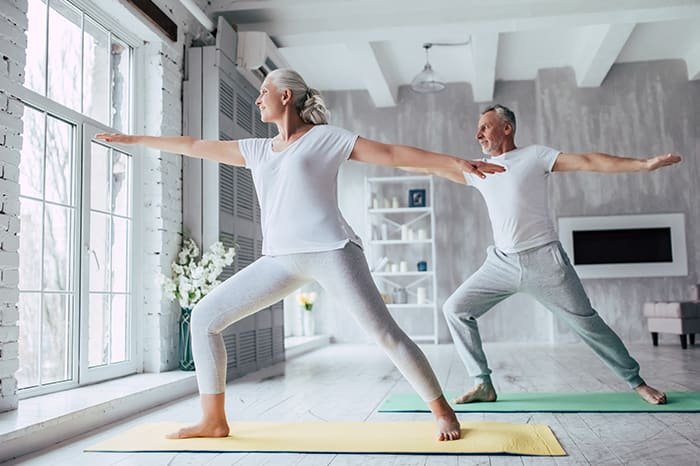
Warrior I (Seated)
One leg extended back, arms reaching up. Strengthens legs and opens hips while staying supported.
Overhead Arm Stretch
Interlace fingers and reach skyward. Lengthens sides and improves shoulder mobility.
Ankle Circles and Point/Flex
Simple foot movements keep circulation flowing and ankles supple—great for edema or poor circulation.
Neck Rolls and Shoulder Shrugs
Slow circles and lifts release upper-body tension from driving or reading.
Seated Relaxation (Savasana Style)
Sit back, close eyes, scan your body. Even two minutes here lowers stress hormones.
Pros and Cons of Yoga for Seniors
Pros
- Zero equipment beyond a sturdy chair
- Improves multiple fitness markers at once (balance + flexibility + mood)
- Adaptable for almost any limitation
- Social when done in groups
- Free or low-cost options everywhere
Cons
- Requires consistency to see results (like any exercise)
- Some poses need modification for joint replacements or severe osteoporosis
- Initial self-consciousness in new classes
The cons are easy to fix: start at home with a video, tell the instructor your needs, and celebrate small wins.
Yoga vs. Other Low-Impact Exercises: Quick Comparison
| Exercise | Balance Boost | Flexibility Gain | Mental Calm | Joint-Friendly | Social Option |
|---|---|---|---|---|---|
| Yoga | Excellent | Excellent | Excellent | Yes | High |
| Walking | Good | Moderate | Moderate | Yes | Moderate |
| Swimming | Moderate | Good | Good | Excellent | Low |
| Tai Chi | Excellent | Good | Excellent | Yes | High |
Yoga stands out for hitting mind and body together in one session.
Getting Started Safely: Your Step-by-Step Plan
Talk to your doctor first—especially with heart issues, glaucoma, or recent surgery. Then pick a style: chair yoga, gentle hatha, or restorative.
Wear comfy clothes. A non-slip mat helps, but a chair works fine. Begin with 10-minute sessions. Breathe through the nose. If it hurts, back off.
Finding the Right Class or Video
Look for “senior yoga,” “chair yoga,” or “gentle yoga over 60.” SilverSneakers, DoYogaWithMe.com, and YouTube channels like Yoga with Adriene offer free senior-specific flows. Local senior centers often run free or low-cost sessions.
Common Mistakes and How to Avoid Them
Pushing too deep too soon tops the list. Listen to your body over your ego. Skipping the breath is another—breath is the magic that calms your system. And never practice on a full stomach.
Real Stories That Will Inspire You
Tom, 75, had two knee replacements. After three months of chair yoga he could garden again without pain pills. Susan, 82, credits daily seated twists with easing her chronic constipation and giving her better sleep than any pill.
People Also Ask About Yoga for Seniors
Is yoga safe for seniors over 70?
Yes, when modified. Chair versions and gentle classes are designed exactly for this age group. Always clear it with your doctor first.
What type of yoga is best for seniors?
Chair yoga, restorative, or gentle hatha. Avoid hot yoga or power flows until you build a base.
Can seniors with arthritis or osteoporosis do yoga?
Absolutely—modifications make it safe and helpful. Avoid deep forward bends if you have osteoporosis; focus on gentle extensions instead.
How often should seniors practice yoga?
Three times a week for 20–45 minutes delivers noticeable results. Daily 10-minute sessions work even better for consistency.
Where can I find free yoga for seniors?
YouTube, senior centers, libraries, and apps like SilverSneakers GO offer plenty of options.
FAQ: Your Most Common Questions Answered
Q: Will I be too stiff to start?
No. Stiffness is exactly why you start. Yoga meets you where you are and gently improves range over time.
Q: Do I need special equipment?
A sturdy chair and comfortable clothes are enough. A yoga mat is nice but optional.
Q: What if I have balance problems?
Chair or wall-supported poses keep you safe while still training balance muscles.
Q: Can yoga replace my walking routine?
It complements it beautifully. Many seniors do both for cardio plus strength and flexibility.
Q: How soon will I notice changes?
Most feel better sleep and less stiffness within two to four weeks. Balance and strength take six to eight weeks of consistency.
You don’t have to overhaul your life overnight. Just carve out ten minutes tomorrow morning. Roll out a mat or pull up a chair. Breathe. Move gently. That’s it.
Margaret, my neighbor, now says yoga gave her back the freedom she thought age had stolen. Thousands more seniors are discovering the same thing every day. Your body is still capable of amazing things—it just needs the right kind of invitation.
Ready to accept? Your first session is waiting. Grab that chair, take a deep breath, and begin. Your future self will thank you.